TL;DR
- Pressure washing looks easy but DIY mistakes often cause streaks, damage (siding, wood, concrete), or short-lived results.
- Common errors: too much pressure, wrong angle (especially upward), blasting single spots, skipping chemicals, inconsistent strokes, turbo nozzles on delicate surfaces, ignoring material differences.
- Use lower pressure + right chemicals (soft wash), steady overlapping technique, and proper prep.
- DIY works for small/simple jobs; hire pros for larger/delicate work to avoid costly repairs.
If you’ve ever looked at your dirty siding, streaky driveway, or weathered deck and thought, “I bet I could clean that myself with a pressure washer from the store,” you’re not alone. It’s one of the most popular DIY home maintenance projects — and one of the easiest to get wrong.
Pressure washing looks simple. Point the wand, pull the trigger, and "ta-da", clean! (and oh it's so satisfying. There is actually a video game). In reality, it’s a skill that requires the right equipment, the right chemicals (or lack of them), proper technique, and an understanding of how different surfaces react. Get any of those wrong and you can end up with streaks, gouges, water damage behind your siding, or expensive repairs that cost
Here are some of the most common mistakes homeowners make, so that you don't also.
Using Too Much Pressure
This is probably the #1 error. It makes intuitive sense: higher pressure should equal faster, deeper cleaning. Unfortunately, that’s rarely the best option on most surfaces.
Cranking the PSI too high can:
- Strip paint or damage vinyl siding
- Gouge or splinter wood on decks and fences
- Etch and roughen concrete and pavers (making them stain worse in the future)
- Force water behind siding or into wall cavities, leading to hidden moisture problems
Many surfaces — especially houses — actually clean better with lower pressure combined with the right cleaning solutions. Professionals often use far less pressure than homeowners expect because they let chemistry do the heavy lifting instead of brute force.
High Pressure at the Wrong Angle
Spraying high pressure upward into siding is a very common mistake.
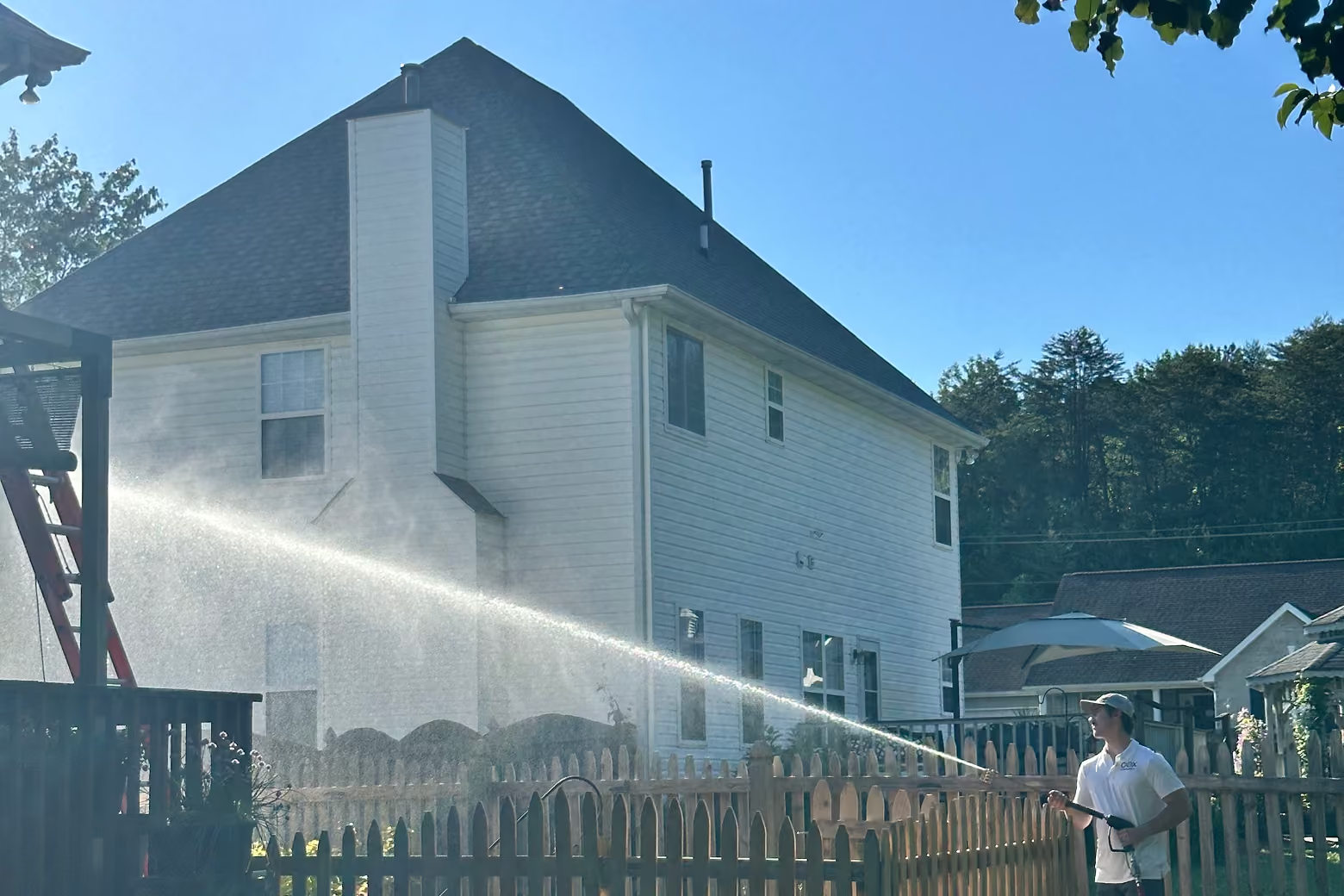
Siding is engineered to shed water downward. Spraying upward or blasting straight at the surface can drive water into gaps, behind panels, or under shingles. Over time that trapped moisture can cause rot, mold, or insulation damage.
The better approach is using to use a soft wash technique and allow the water to strike gently or fall onto the surace so that water injection is avoided.
Directing Too Much Pressure at a Dirt Spot
This is a variation on a theme. When you see a stubborn patch of algae, mold, or a dark stain, the natural reaction is to zero in with the nozzle and blast it. Sometimes the spot disappears entirely...along with the siding or surface it was on. This almost always creates more problems than it solves.
Concentrating high pressure on one small area can remove paint, sealant, or the top layer of the substrate while leaving a “clean spot” that stands out against the rest of the surface. In many cases the dirt needed chemical pre-treatment to break it down first — not just more pressure.
Brute force on a single spot is one of the fastest ways to create permanent damage or highly visible uneven results.
Skipping Pre-Treatment
A lot of homeowners assume water pressure alone will handle everything.
For the organic growth (mold, mildew, algae) that’s common on siding, decks, and roofs, pressure alone rarely kills the roots, nor does it typically fully clean it. You usually need the right chemical to break down the grime first, then a gentle rinse.
Skipping chemicals or using the wrong ones can lead to:
- Temporary results (the organics proliferate and return quickly)
- Damage to plants, grass, or the surface itself
- Wasted time fighting stains that chemistry could have loosened easily
- Safety or environmental issues
Professionals use specific, surface-appropriate cleaners (often low-pressure “soft wash” solutions for houses) that are formulated to do the work safely and effectively.
Starting and Stopping Mid-Stroke
This mistake in technique is incredibly common and one of the main reasons DIY jobs look streaky or patchy.
If you start spraying in the middle of an area, stop to reposition, lift the wand on and off the surface, or vary your speed and distance, you’ll create visible lines, streaks, or uneven cleaning. The same thing happens when you don’t overlap passes consistently.
The correct technique is steady, overlapping passes with constant motion and distance, similar to mowing the lawn in straight lines, as well as a strong feathering at the end of each pass so there is no hard start/stop lines. Start the water flow before the wand reaches the surface and keep it moving smoothly across and off the other side.
Using a Turbo Nozzle (Rotating) on Delicate Surfaces
Turbo nozzles are great for tough concrete; It's the nuclear option. But they are destructive on wood, vinyl, or painted surfaces. Many rookies use them everywhere and regret it.
Not Accounting for Surface Variability
Treating all areas the same: Older painted surfaces, soft woods, stucco, or old brick with soft mortar need gentler approaches than new concrete, fresh brick, and hardy painted siding. What works on your neighbor’s house might wreck yours.
The Bottom Line
Pressure washing your own property can be satisfying and save money when it’s done correctly. But every surface is different. What works well on a concrete driveway can ruin vinyl siding or a wood deck. Different types of dirt or stains require different approaches. And the equipment and technique matter far more than most people realize.
If you’re comfortable learning the proper methods and are working on smaller or straightforward areas, DIY can make perfect sense.
For larger properties, roofs, delicate or older surfaces, or when you want professional-grade results without the risk of costly damage, bringing in an experienced exterior cleaning professional can be the smart choice. They have the specialized equipment, the right chemicals, the training to get it done right — usually faster and with less hassle than you’d expect.
Knowing these common pitfalls is strong step toward better results, whether you tackle the job yourself or decide to call in the pros.
Q&A
Q: Do we recommend a DIY approach?
A: Yes
Q: Why?
A: Because, 'merica.
Q: Is pressure washing my house myself worth it to save money?
A: It can be for small, straightforward areas if you have the right equipment, take time to learn proper lower-pressure/soft wash techniques, and protect surrounding surfaces.
Q: Can I just use a pressure washer with water only?
A: For simpler jobs, yes. For heavy organic growth like mold, mildew, or algae on siding, decks, or roofs, water alone rarely kills the roots or provides a deep clean. Pre-treatment with the right surface-safe chemicals is usually essential for good, longer-lasting results. Using the wrong (or no) chemicals is one of the most common reasons jobs look unfinished or dirty again quickly.
Q: What pressure should I use?
A: Much lower than most people think. Start low and only increase if needed. Houses and vinyl siding often do best with soft wash (low-pressure + chemicals). Concrete driveways can handle more, but even then, technique and the right nozzle matter more than raw power. Always test a small, hidden area first.
Q: How do I avoid streaks on my driveway or siding?
A: Use steady, overlapping passes at consistent speed and distance. Avoid starting/stopping mid-stroke, maintain proper wand angle, and consider a surface cleaner attachment for flat areas. Feathering the ends of each pass helps eliminate hard lines.
Q: Are turbo/rotating nozzles safe?
A: They’re powerful (“the nuclear option”) and great for tough concrete, but they can quickly damage wood, vinyl, painted surfaces, or softer materials. Use them sparingly and with caution — or stick to wider fan nozzles (25°–40°) for most home jobs.
Q: What if I’ve already made one of these mistakes?
A: It depends on the damage. Minor streaks or etching can sometimes be fixed with gentler follow-up cleaning or sealing. More serious issues (stripped paint, water damage, gouges) may require painting, repairs, or professional restoration. The sooner you address it, the better.
Q: When should I definitely hire a professional?
A: For two-story homes, roofs, large properties, older/delicate surfaces, or if you don’t have the right equipment and experience. Pros bring specialized soft wash systems, proper chemicals, safety gear, insurance, and the practiced technique that avoids the common pitfalls outlined here.
About The Author
Andrew Cox, Founder of Cox Exterior Cleaning Co.
Hi! I'm Andrew Cox, a former physical therapist, who got tired of bureaucracy and selling chances, and started Cox Exterior Cleaning Co. to serve Knoxville in a new way - making things beautiful again. I wrote this article because I believe in getting your hands dirty, staying active, and building awesome stuff. You can just do things. But what you don't know, you don't know. This article is designed to help people know those things so they can make the right decision for the project.